


Transitions—moving from one activity to another—are often some of the most challenging moments of the day, both at home and in classrooms.
If you’ve ever tried to end a play session with your child, you know the struggle: they’re deeply engaged, having fun, and stopping seems impossible. You might say, “five more minutes!” only to repeat it multiple times.
Teachers face similar challenges in classrooms full of active students. Announcing transitions verbally often requires repeating instructions, which can feel like managing chaos.
Here’s what research and experience reveal when comparing visual timers to verbal reminders:
Why verbal reminders can fall short
We rely on verbal cues because they’re easy, but time is abstract—especially for younger children or those who struggle with time awareness. Verbal reminders often:
Words alone ask children to track time internally, remember it, and act on it—a lot of work for a young, busy brain.
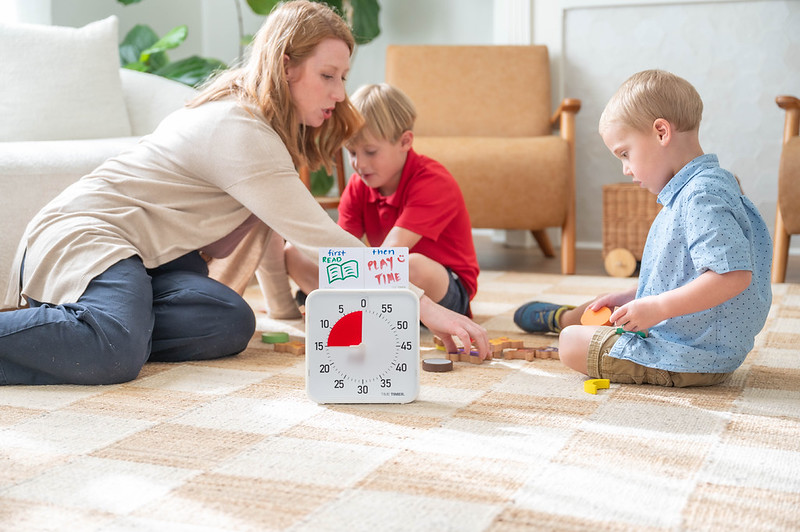
How visual timers help
Visual timers make time visible, concrete, and easy to understand. Kids can watch time pass instead of trying to remember verbal cues.
At home, parents notice smoother wrap-ups. In classrooms, teachers find transitions quieter and more efficient. Students check the timer themselves, reducing repeated reminders and helping them take responsibility for moving from one activity to the next.
Reducing stress and supporting independence
Visual timers create consistency. Five minutes always looks the same. When the timer ends, there’s no surprise. This reliability helps children feel less anxious, reduces power struggles, and encourages them to transition independently.
Regular use of visual timers also helps children learn time management skills. Kids often check the timer themselves instead of asking, “How much longer?” They may even remind peers when time is nearly up, fostering confidence and autonomy.
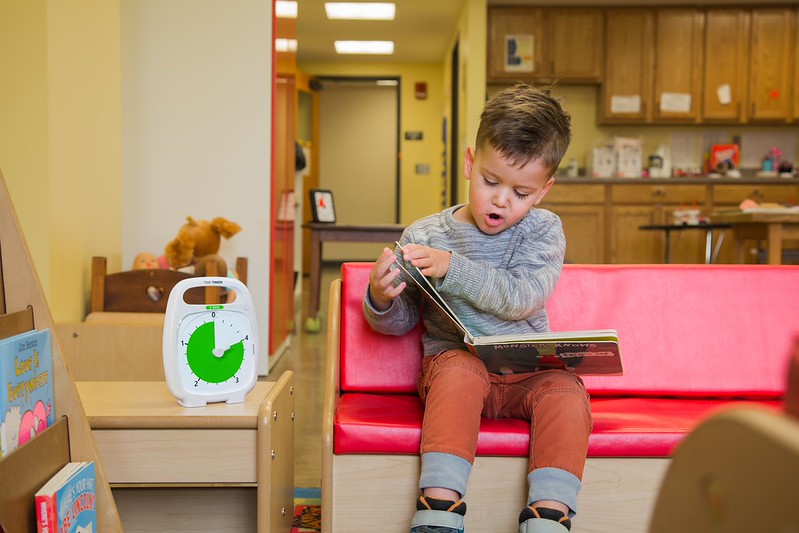
Making daily routines easier
Verbal reminders are helpful for guidance, but they’re most effective when paired with visual timers. By making time clear and tangible, visual timers turn stressful transitions into manageable, predictable moments—improving flow for both children and adults.